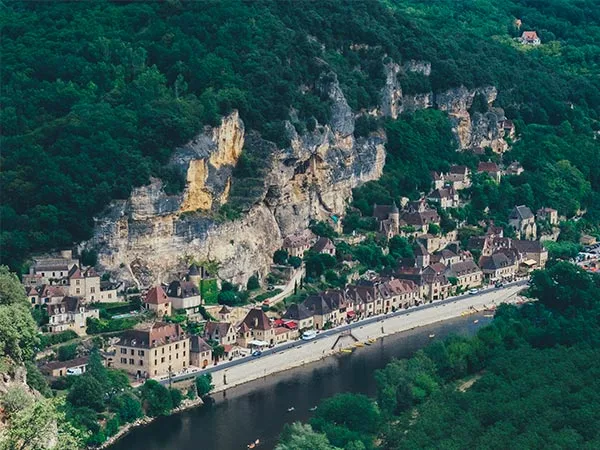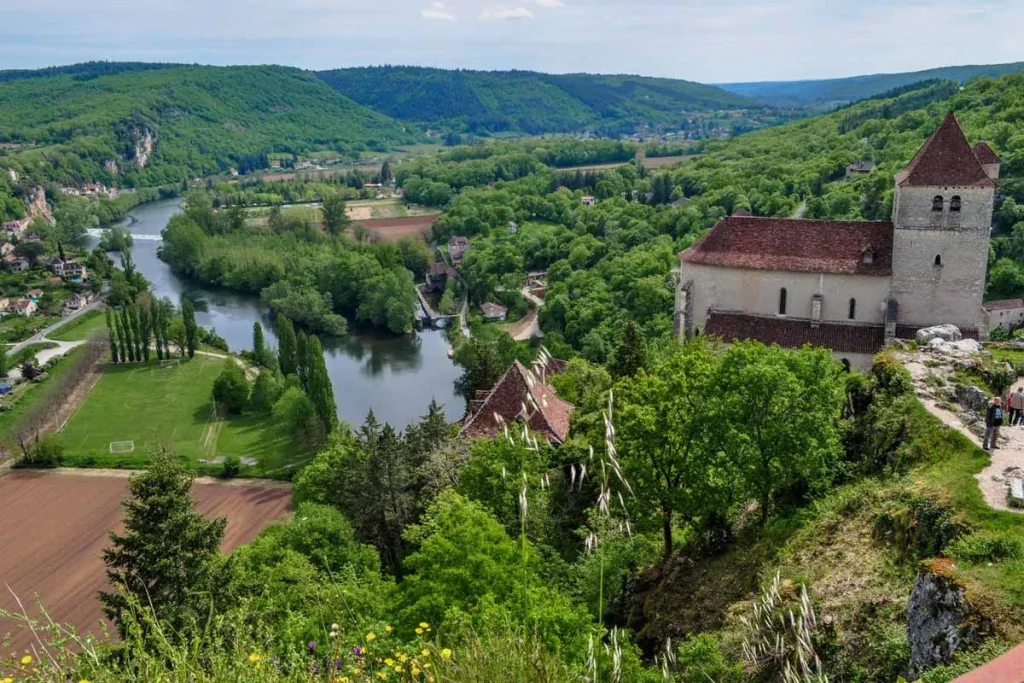


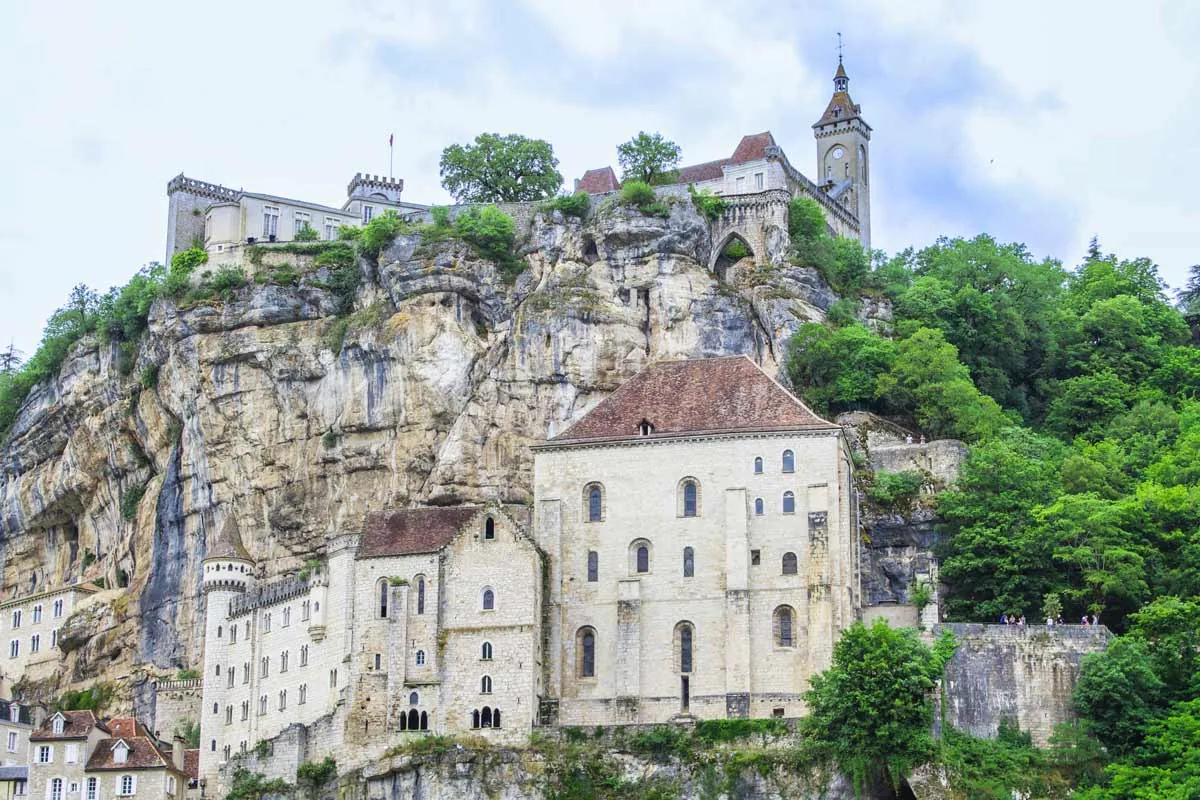

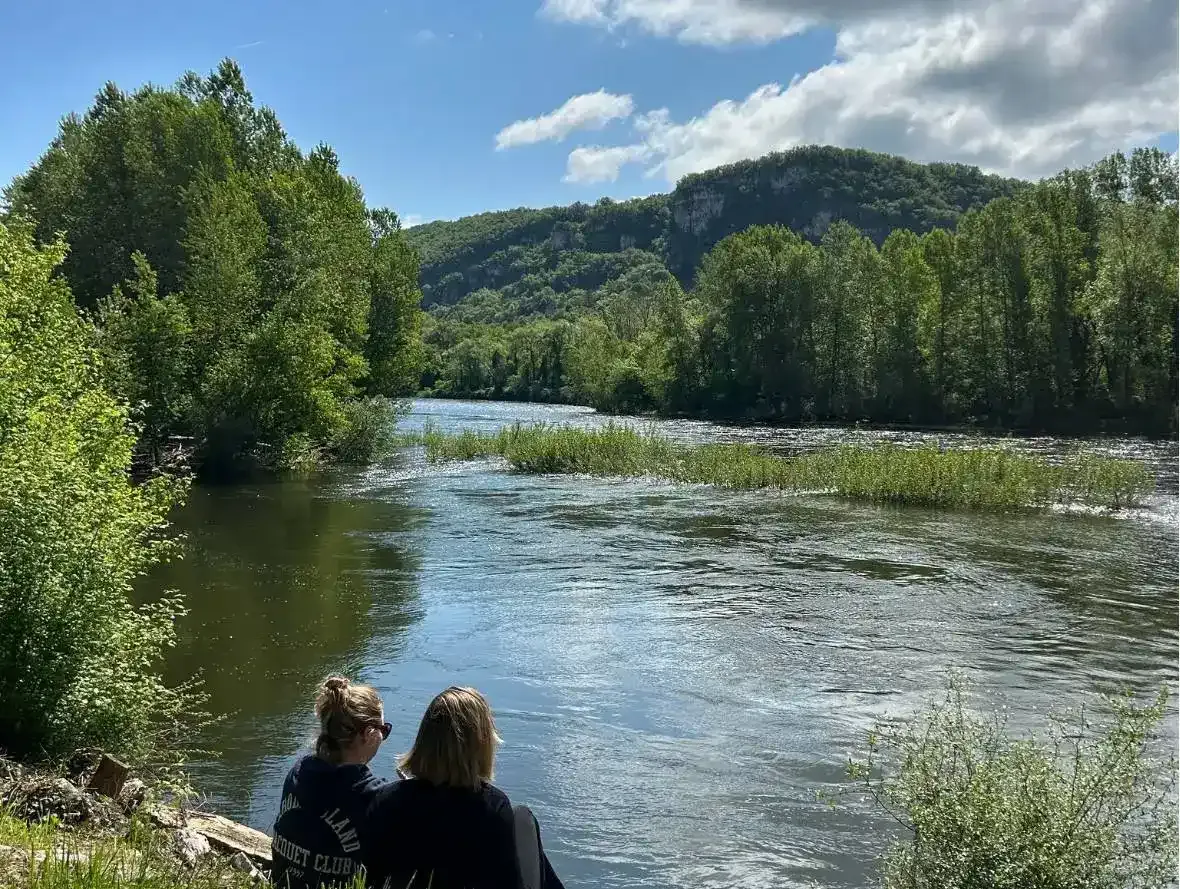
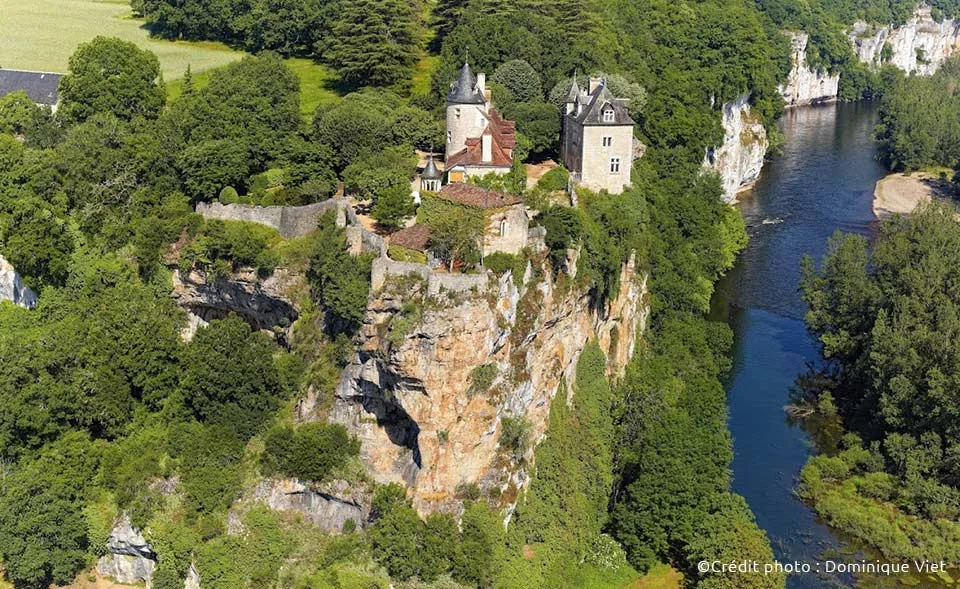
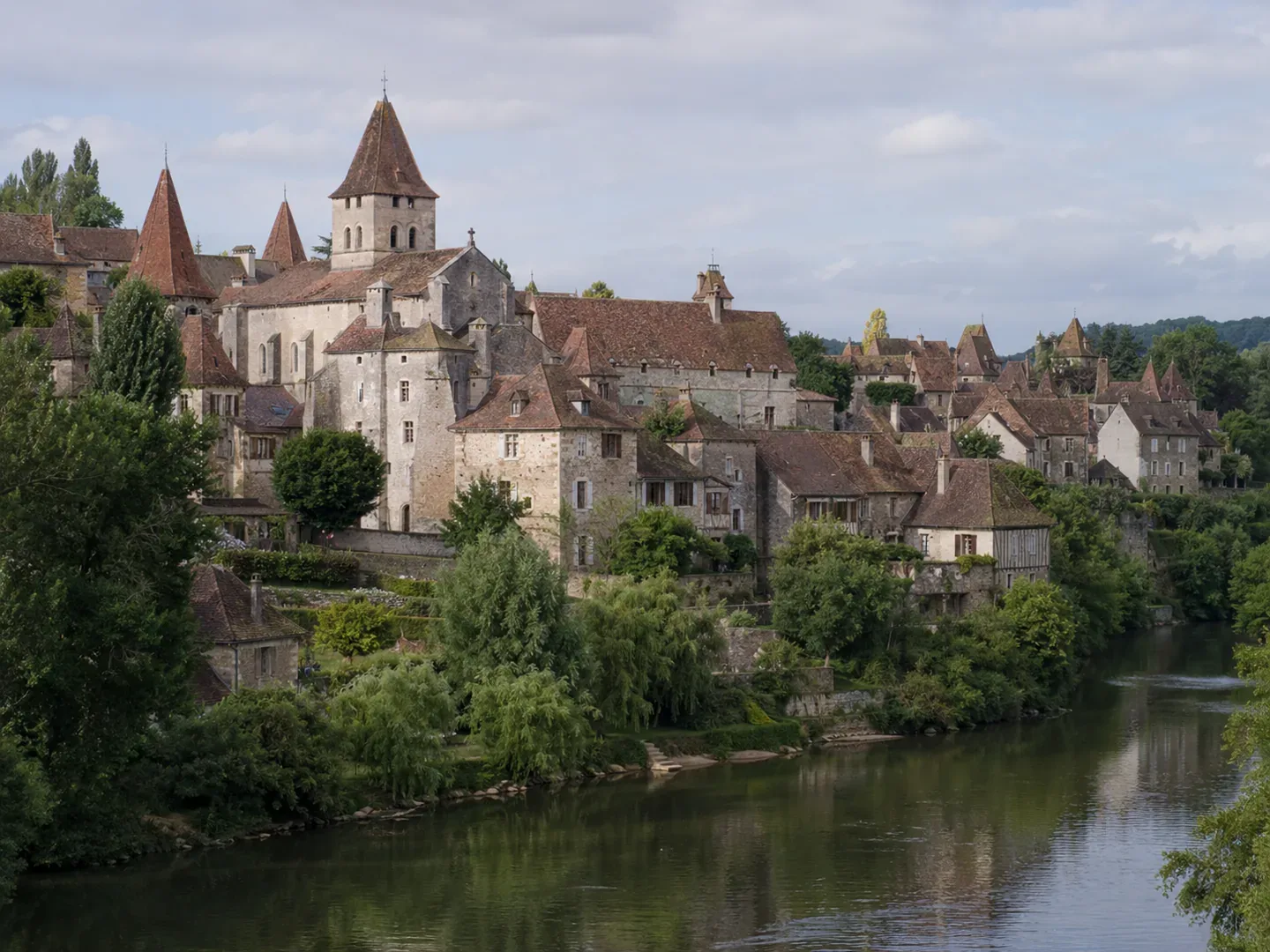
15 minutes from our campsite, the brown roofs and turrets of Carennac are reflected in the green waters of the Dordogne. Listed as one of the Most Beautiful Villages of France (Plus Beaux Villages de France), this village hides an 11th-century priory, a remarkable Romanesque doorway, a château housing the Pays d'art et d'histoire (Land of Art and History) centre, and one of the loveliest swimming spots in the Haut-Quercy. From our campsite in the Lot, Carennac is easy to explore at a relaxed pace in a day. Here is what our team recommends seeing first, between Romanesque heritage, the banks of the Dordogne and neighbouring villages.
Key facts
- Carennac has been one of the Most Beautiful Villages of France (Plus Beaux Villages de France) since 1982.
- The Cluniac priory dates back to the 11th century and features a rare Romanesque doorway.
- The Château des Doyens houses the Pays d'art et d'histoire centre of the Dordogne Valley.
- Fénelon, writer and royal tutor, stayed at the priory in the late 17th century.
- The Dordogne runs alongside the village, with a lifeguarded swimming beach in summer.
The Cluniac priory and the Romanesque doorway
In the heart of the village, the Priory of Saint-Pierre stands out as Carennac's major monument. Founded in the 11th century and attached to Cluny in 1047, it retains its Romanesque church, its 12th- and 16th-century cloister and, above all, its extraordinary carved tympanum above the doorway.
This masterpiece depicts Christ in Majesty surrounded by the symbols of the Evangelists and the twelve Apostles, in a style comparable to the finest Romanesque doorways in the south-west.
Inside, the chapter house holds a 15th-century Entombment, a sculpted group of rare intensity. Our team recommends starting your visit early in the morning, when the low-angled light brings out the fine detail of the tympanum carvings.
Our team's extra tip: go through the archway to reach the small cloister courtyard, often missed by visitors in a hurry. It's the most peaceful spot in the village, with its carved arcades and views over the stone-slab roofs. A truly timeless moment, perfect after a morning wandering the lanes!
The Château des Doyens and Fénelon's legacy
Next to the priory, the Château des Doyens houses the Pays d'art et d'histoire centre of the Dordogne Valley. This 16th-century building, altered in the 17th and 18th centuries, showcases the landscapes, history and built heritage of the whole river basin. Permanent and temporary exhibitions put Carennac into its wider geographical context, from the Périgord to the Haut-Quercy.
The château also recalls the presence of Fénelon, who stayed in Carennac between 1681 and 1695 as commendatory abbot of the priory. According to local tradition, he wrote part of The Adventures of Telemachus here. A room in the château traces this period and the literary legacy of the writer, tutor to the Duke of Burgundy at the court of Louis XIV.
Swimming and paddling on the Dordogne
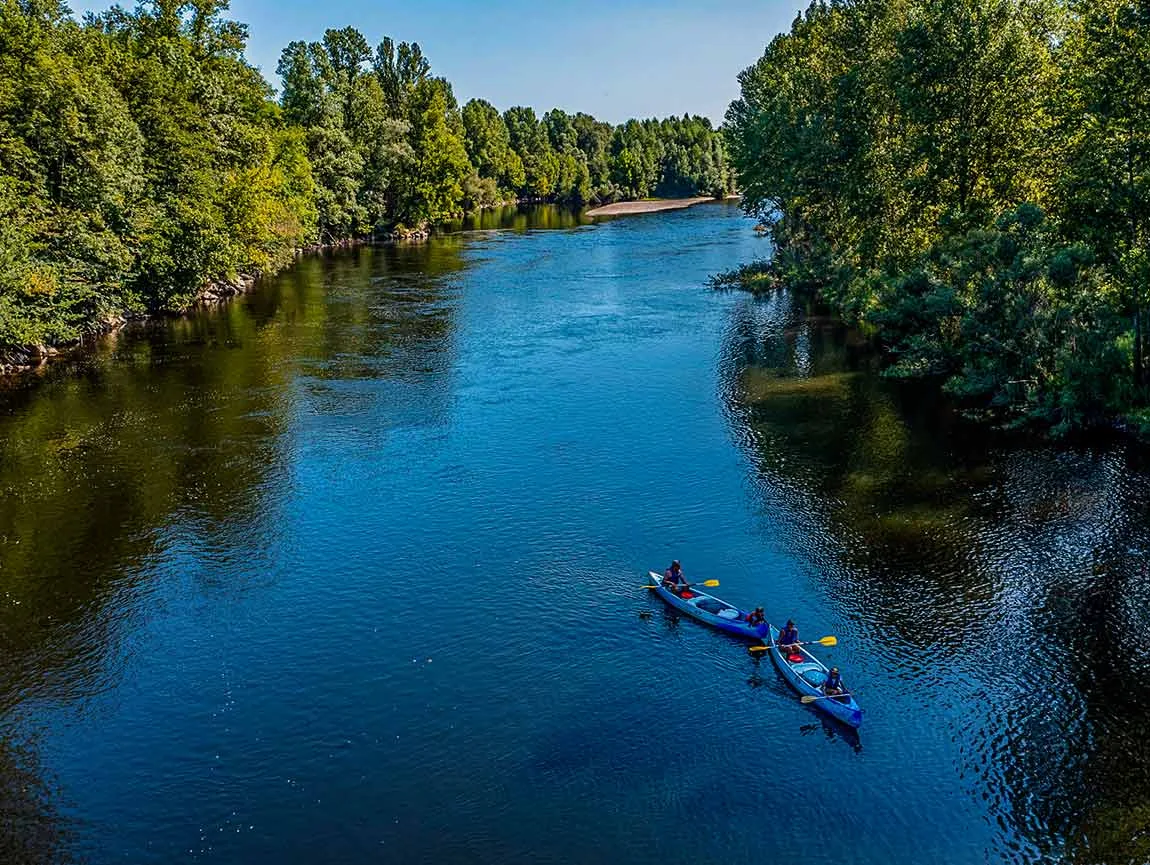
Below the village, the Dordogne offers one of the loveliest swimming spots in the Haut-Quercy. The beach, lifeguarded in July and August, has a mix of pebbles and sand, with shallow areas ideal for children. The current is moderate, and the setting looks straight onto the priory roofs and the Romanesque bell tower.
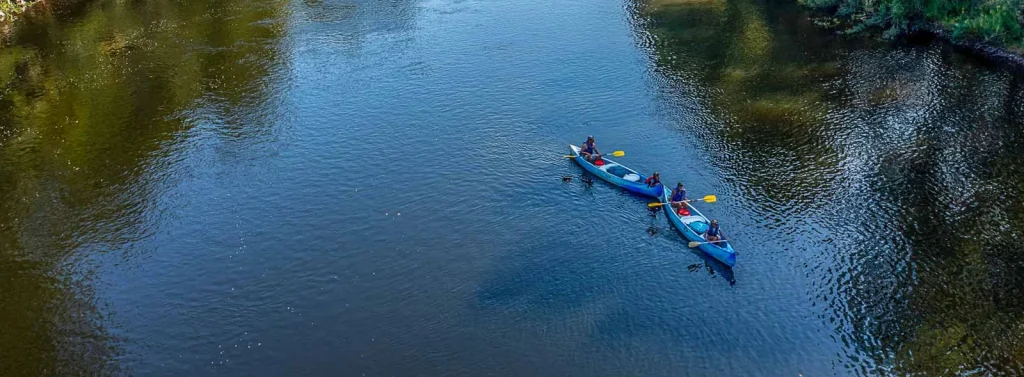
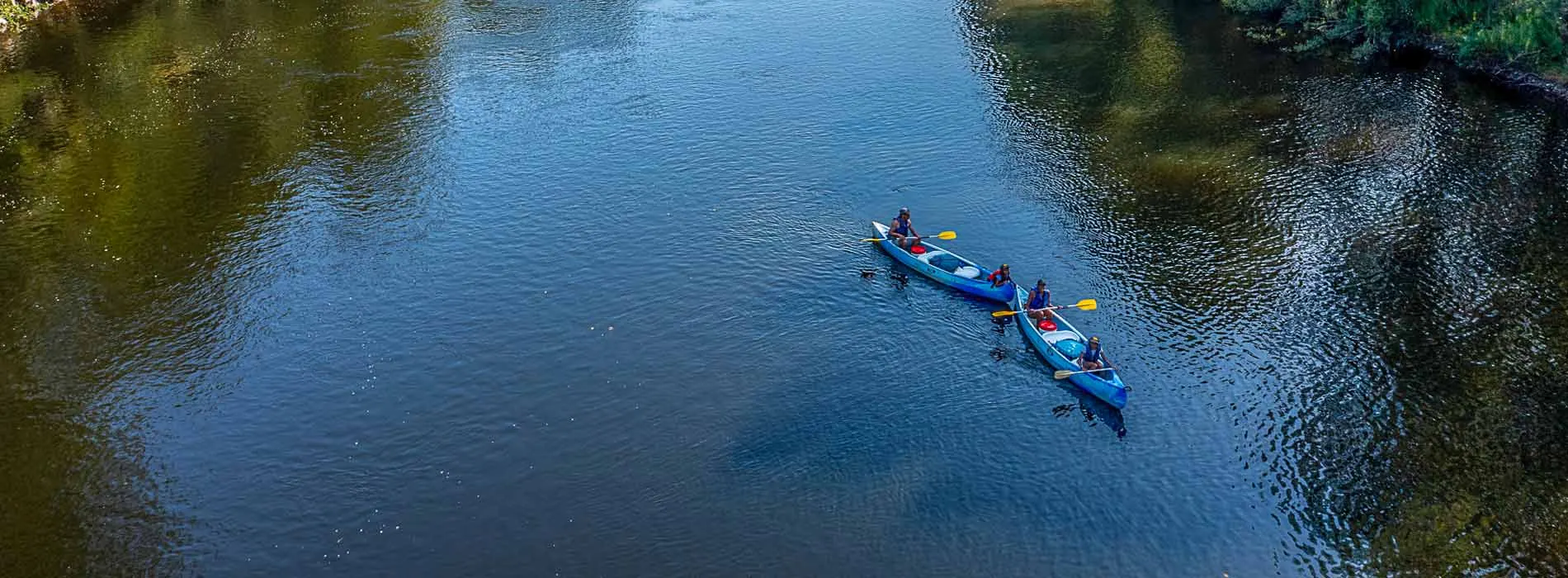
Hire companies based upstream offer canoe trips down to Gluges or Meyronne, with family routes of 8 to 15 km depending on how long you want to paddle. As our team puts it: “Our guests often discover Carennac from the river. The view of the village from the water, with the priory doorway overlooking the bank, is one of the best memories they take home from their holiday in the Lot.”
Around Carennac: listed villages, causses and prehistory
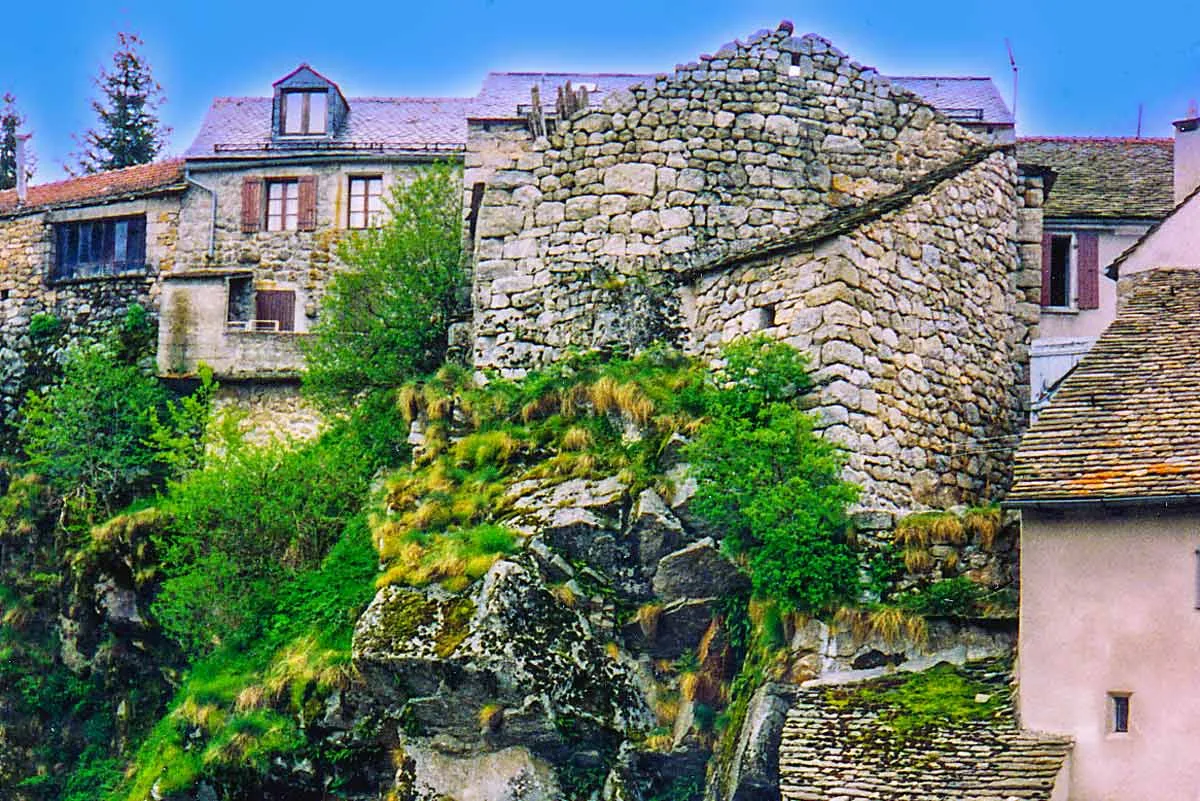
Carennac is part of an exceptional string of remarkable villages. Less than 15 minutes away, Loubressac, Autoire and Curemonte also boast stone houses and hilltop châteaux. To explore further, our guide to the most beautiful villages in the Lot helps you plan a tailor-made itinerary among golden stone and Quercy landscapes.
Nature lovers often carry on with a day of hiking on the Causses du Quercy, a few kilometres south of the village. The limestone plateaus alternate dry-stone walls, truffle oaks and shepherds' huts (cazelles), in a wonderfully peaceful setting.
Finally, history buffs can head on to the neighbouring Périgord. About 1 hr 30 min away by road, Lascaux Cave and its replica Lascaux IV complete the picture of the prehistoric south-west, ideal to combine with a stay of several days around Carennac.
Questions at the counter
FAQ - Visiting Carennac
How much time do you need to visit Carennac?
To visit Carennac, allow half a day: an hour for the priory and its Romanesque tympanum, an hour for the Château des Doyens and the Pays d'art et d'histoire exhibition, then a stroll through the village lanes. Families will add an afternoon swimming in the Dordogne. A longer stay lets you combine Carennac with Loubressac and Autoire, both less than 15 minutes' drive away.
Can you visit Carennac priory for free?
Access to the church and the outside of Carennac priory is free all year round. The cloister, the chapter house and the Fénelon exhibition require a combined ticket with the Château des Doyens. The price is modest, and free for under-18s. Very informative guided tours are run in summer by the Dordogne Valley tourist office.
Where can you swim in Carennac?
In Carennac, the main beach is below the village, on the right bank of the Dordogne. It is lifeguarded in July and August, with shallow areas for children and an exceptional setting facing the priory. Other access points to the river can be found upstream towards Bretenoux and downstream towards Gluges, quieter and popular with locals in high season.
Can you go canoeing from Carennac?
Yes, several hire companies offer canoe trips from Carennac. Family routes link Carennac to Gluges (about 8 km, 2 hours) or to Meyronne (about 15 km, half a day), on a stretch of the Dordogne designated Natura 2000. The scenery alternates cliffs, meanders and hilltop villages. Book an early-morning start if possible to avoid the crowds and enjoy calmer water.
Which other listed villages can you visit near Carennac?
Around Carennac, several villages listed among the Most Beautiful Villages of France (Plus Beaux Villages de France) can be visited in a day: Loubressac and its panorama over the Dordogne Valley, Autoire and its waterfall, Curemonte and its three châteaux, or Collonges-la-Rouge over in the Corrèze. Allow 15 to 30 minutes' drive between each village, on quiet roads through the landscapes of the Haut-Quercy and the Limousin.
Fancy visiting Carennac from our campsite?